There’s a moment with any lighting upgrade where specs stop mattering and a straightforward question takes over: Is my lighting capable of burning down trees and scaring older people? OR, can I wheel, camp, or otherwise out in the middle of Mordor, or am I just LARPing?
The KC FLEX ERA 40” light bar entered my life right at that crossroads. I spend a lot of time driving long stretches of road with absolutely zero light pollution, not “dim,” not “rural,” but nothing. Add Florida torrential rain, a suspect street from any given horror movie, trails that resemble leftover trench warfare, and lightning that stops being an accessory and becomes a requirement.
Table Of Contents
Let There Be Light: KC’s Roots
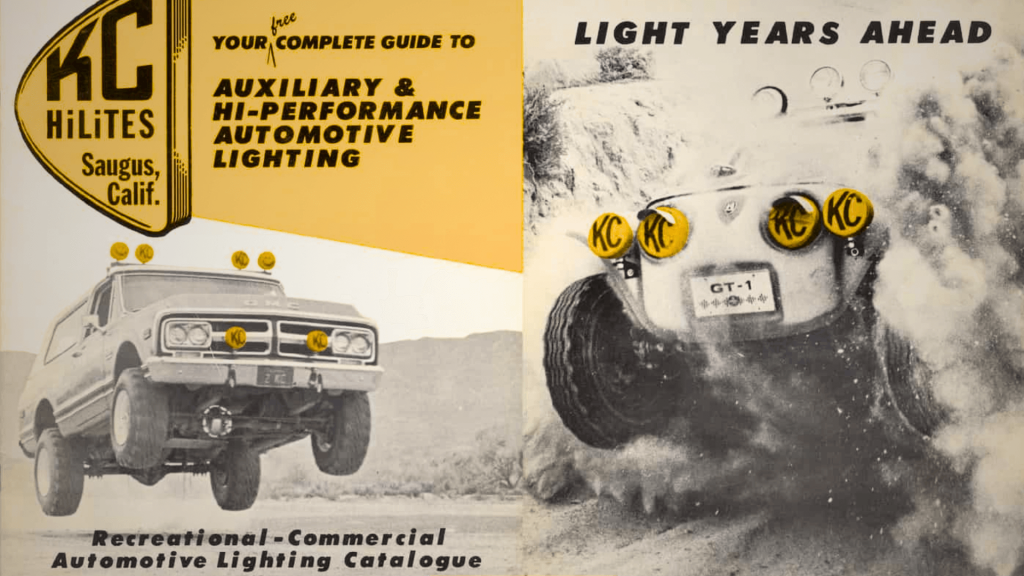
KC has been in this space long enough that most of us carry some built-in nostalgia. Growing up in the ’70s and ’80s, KC lights were everywhere, dune buggies, magazine spreads, rigs that looked like Simon & Simon’s Powerwagon, don’t judge me. The question today isn’t whether KC knows how to build lights. It’s whether that legacy still holds up when bolted to a modern, work/overland-focused 4Runner.
This article covers what the KC FLEX ERA 40” actually is, how it performs when used the way it’s intended, and what it took to mount it to a Gobi Stealth rack on my 2018 Toyota 4Runner TRD Off-Road. Spoiler alert: KC didn’t make this install hard. I did.
KC FLEX ERA 40” – What Is It?
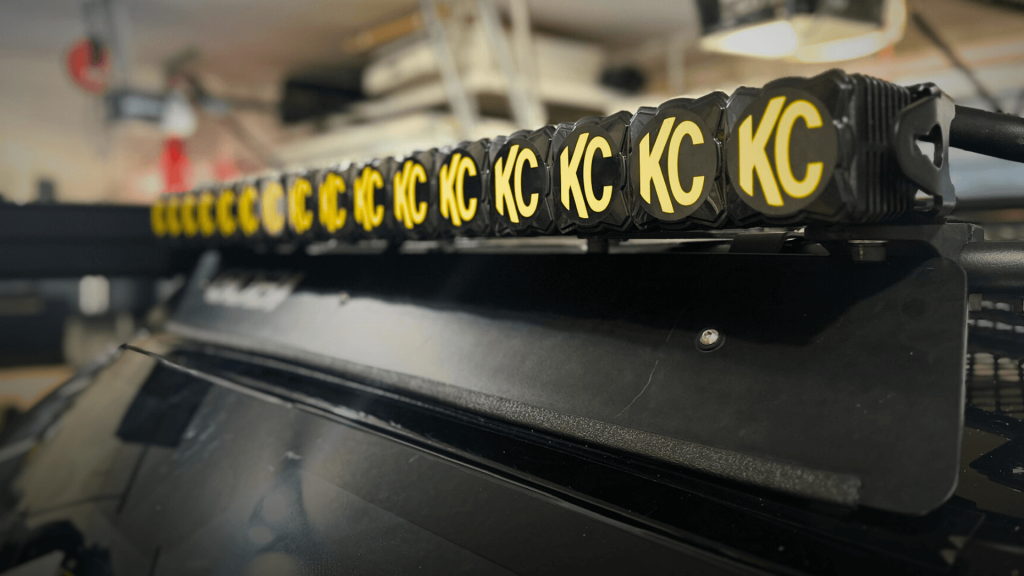
At first glance, the FLEX ERA doesn’t look like your typical one-piece extruded light bar, and that’s by design. Instead of a single housing, KC built the ERA as a modular system, linking individual LED modules together to form the bar. Yes, I’m well aware that Rigid, Morimoto, and just about every top-tier brand have formidable options in their arsenals. I wanted KC lights.
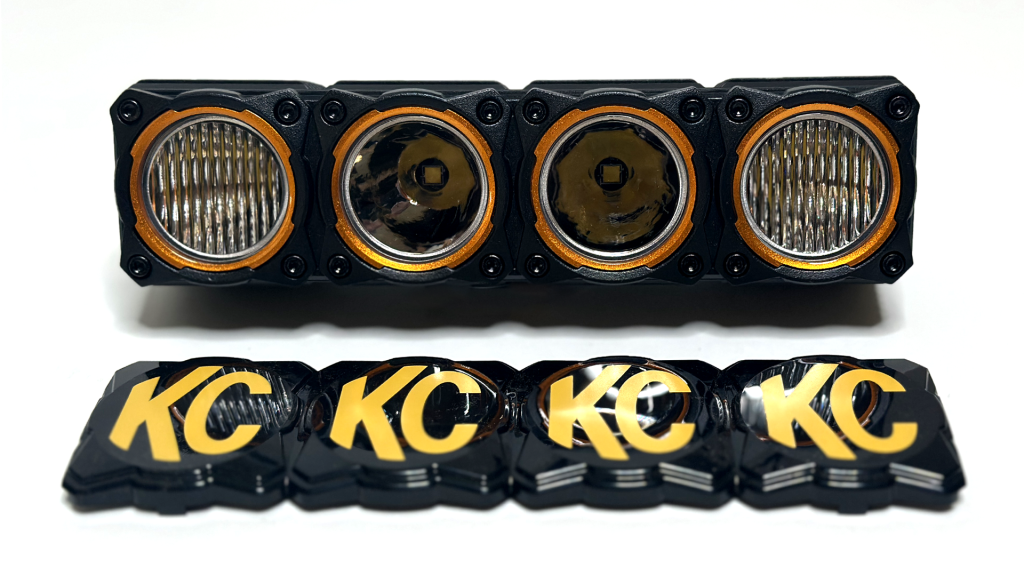
That approach brings some real advantages. You can run the bar straight or curved, mix beam patterns, and even reconfigure the setup later without replacing the entire unit. The kit I ran, the 40” Master Kit (SKU 0294), was configured as a straight bar using KC’s mixed beam setup: spot and combo modules with clear lenses. KC also included additional spot-only modules, which let you bias the bar toward long-range visibility if your driving style changes.
This doesn’t feel like KC chasing trends. It feels like KC is further modernizing and evolving their design while keeping the core philosophy intact: build something that lasts, then make it a lot stronger than necessary – like the voices in my head.
Build Quality: The First Impression That Sticks
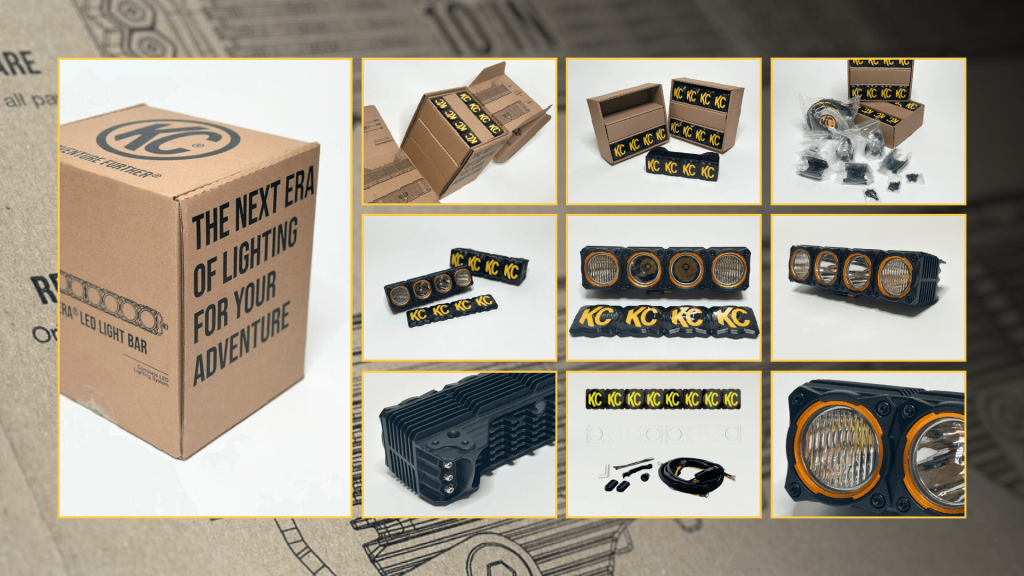
A quick preface: this article will not be an installation overview for the following reason: before a single bolt was tightened or a wire routed, the packaging and presentation set the tone. Even unassembled, everything was laid out and printed on the interior of the box! The box, people! Next, the hardware was clearly organized, modules were well protected, and nothing felt like it had been tossed into a box as an afterthought.
Then there were the instructions, and this is where KC genuinely impressed me.
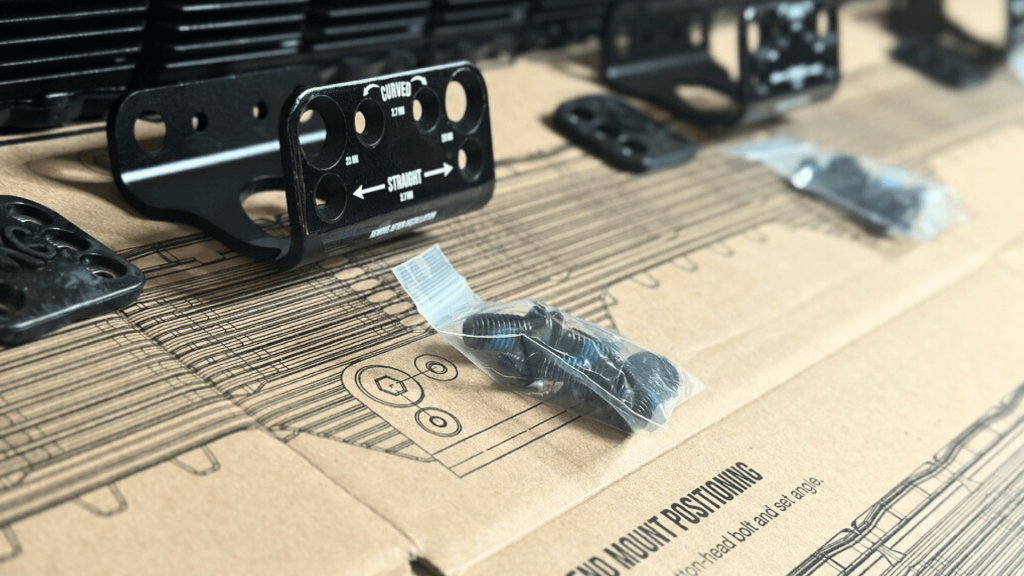
Instead of a flimsy booklet buried under foam, the instructions are printed directly in the box, laid out as a 1:1 template. You can physically place the bolts, brackets, and modules directly on the printed guide to confirm size and orientation before touching a tool. It’s one of those rare aftermarket moments where you pause and think, “Why doesn’t everyone do this?” Totally brilliant.
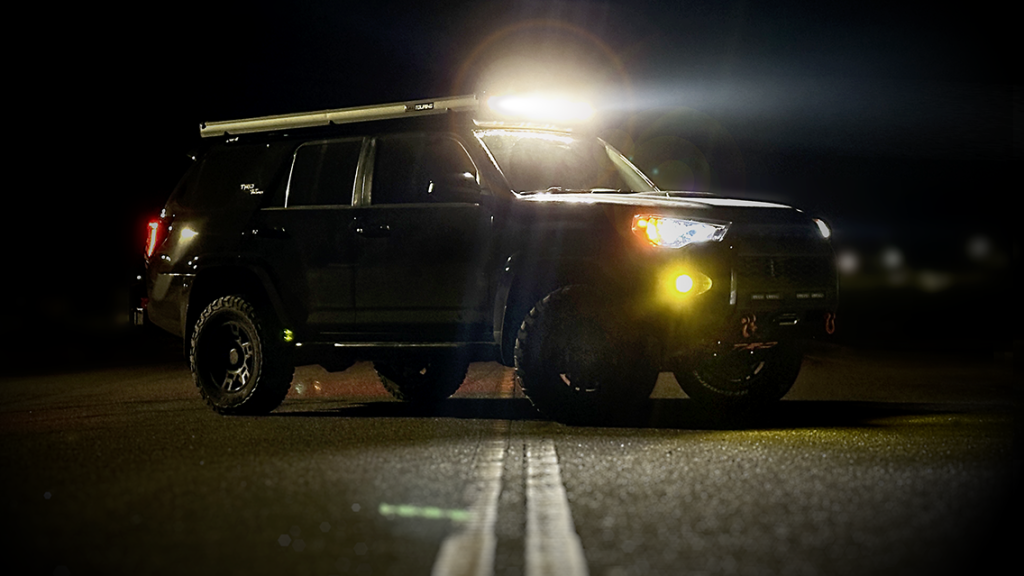
The light bar’s size, especially the height, is both compact and understated, but whether the light covers (supplied) are on or off, someone will call it “bad ass” at the gas station; so prepare yourself for the questions.
Once assembled, the bar feels exactly like a premium product should. The housing has real mass. The hardware inspires confidence. Nothing flexes, rattles, or feels cost-cut. This is the kind of product where the phrase “you get what you pay for” stops being marketing fluff and becomes immediately apparent the moment you pick it up.
Modular Design Philosophy: FLEX ERA Now Vs. Then
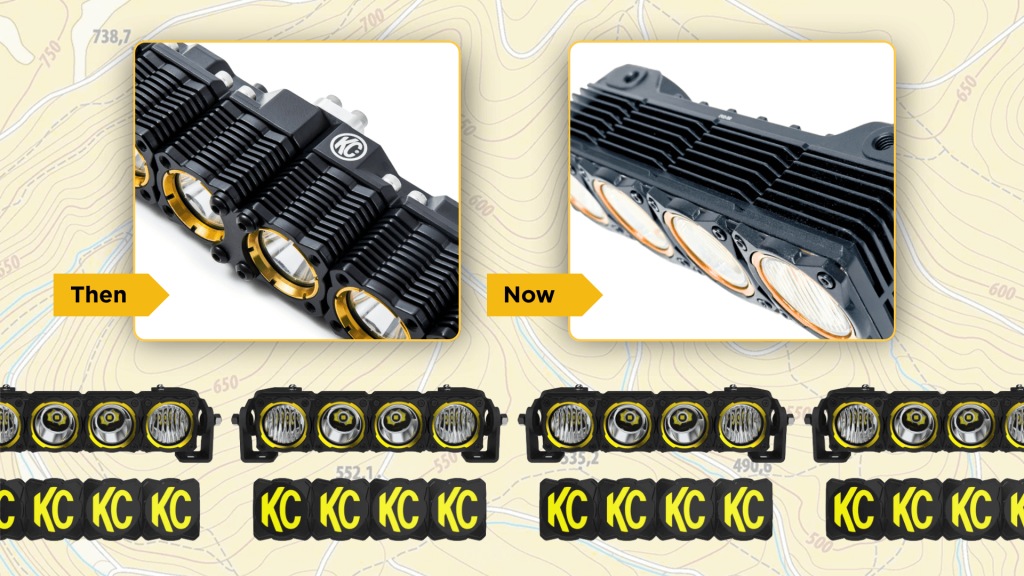
Overlanding and 4×4 builds as a whole have not so quietly shifted toward a modular mindset. We all finally learned what Legos had known forever. Which, as a fanatic for utilitarian design, I emphatically applaud. Rather than committing to single-purpose components that eventually outgrow their usefulness (or planned obsolescence), more enthusiasts are leaning into systems that can evolve alongside the vehicle. The strength of that approach is simple: you grow with a platform rather than replace it.
Beefier & Better Than Ever
That’s where the FLEX ERA design philosophy really stands apart from previous-generation light bars. Instead of locking you into a fixed length, beam pattern, or configuration, KC built the ERA around modular lighting blocks that can scale up, down, or sideways as your build changes. I started with the 40” kit, but the system itself doesn’t care; shorter, longer, tighter, wider, it’s all possible without starting over. Moreover, at their size, I’ve seen these light systems configured on roof racks and front grills, and swapped into lightbar locations on aftermarket front bumpers.
While you can see here that both designs are equally beautiful in their construction, the benefits of the newer FLEX ERA design become immediately apparent once you handle it in person. The individual modules bring a level of heft, stability, and structural integrity that older one-piece bars didn’t have, while still packaging an almost absurd amount of light into a surprisingly compact footprint.
At its core, the FLEX ERA isn’t just a lighting upgrade; it’s a lighting platform.
FLEX ERA Design & Performance Highlights:
- Material: Aluminum Alloy housing with serious mass and rigidity
- Light Temperature: 5000K (clean, usable output without harsh blue tones)
- Candela (per module): 644,000 cd (Combo); 720,000 cd (Spot) – this is insane BTW.
- Wattage: 48W per module; 432W total in the 40” configuration
- Weight (40” configuration): ~21 lbs.
Beam Pattern & Real-World Output
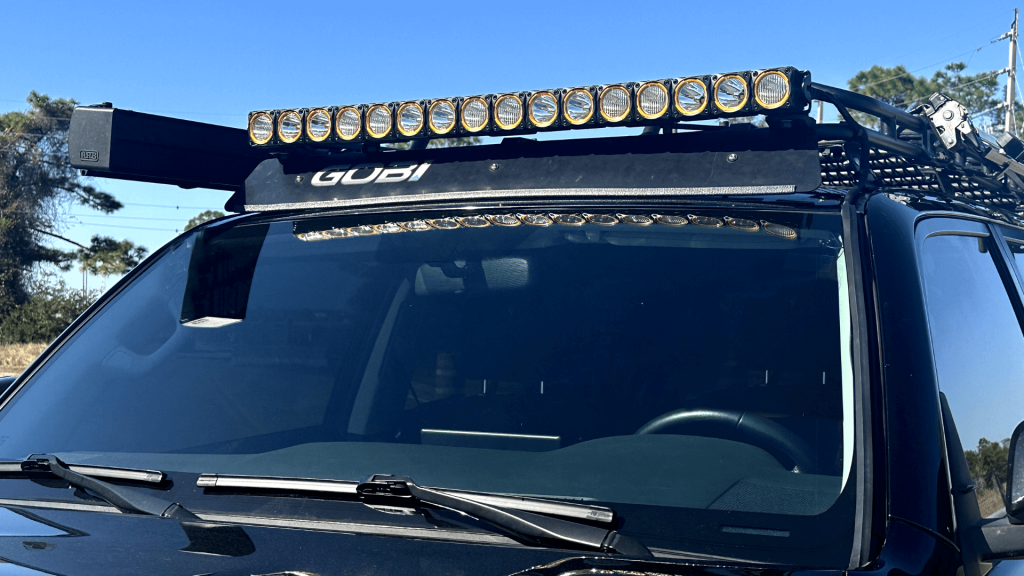
I ran the bar in KC’s mixed configuration, spot and combo modules, and tested it in conditions that reflect how I actually drive. That meant flat Florida trails, long dirt roads, private land, and extended stretches of single-lane pavement with absolutely zero ambient light.
What stood out wasn’t raw brightness for the sake of brightness. The FLEX ERA delivers usable light. Long-range visibility is excellent without turning the foreground into a glare wall, and peripheral light fills in the edges of the road and trail without making hot spots.
KC publishes full lumen specs, and those numbers are readily available for anyone who wants to compare spreadsheets. In practice, what mattered far more to me was how controlled that output felt in real-world driving.
I tested the lighting system progressively: factory running lights, upgraded fogs, a front bumper-mounted light bar, and finally the KC on top. Rather than overpowering everything else, the FLEX ERA completed the system. It added seemingly endless reach and clarity exactly where the other lights naturally fell off, which is precisely what a roof-mounted bar should do.
Power, Wiring & Electrical Choices
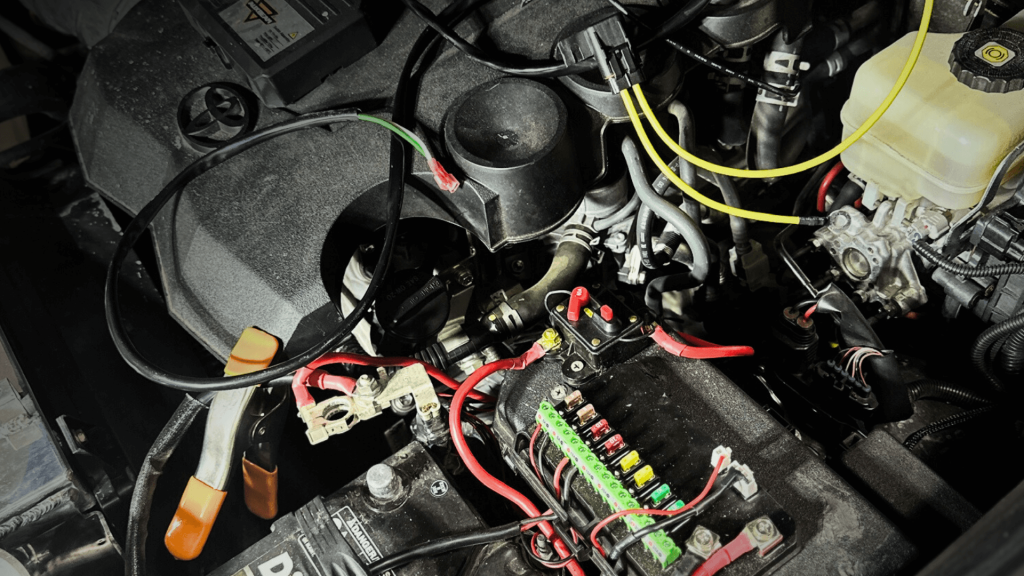
The FLEX ERA pulls real power, and that’s not a negative; it’s simply the reality of serious lighting. I wired the bar into an Auxbeam 8 gang switch panel, but intentionally retained KC’s included relay and fuse in the circuit. That redundancy might feel excessive to some, but diagnosing electrical issues at night isn’t a hobby I’m interested in taking up, and “cause’ I done blown my shit up a time er’ two.” Moving on!
PRO TIP: Even if you’re running an aftermarket switch panel, keep KC’s relay and fuse in place. Redundancy here isn’t overkill; it’s insurance.
If you already have an Auxbeam, Switch-Pros, or sPOD system, integration is straightforward as long as you plan your power distribution correctly. This isn’t a light bar you casually tie into factory wiring and hope for the best.
Noise, Aero & Highway Manners
Wind noise was a primary concern going into this install. I initially considered the KC Gravity Titan light bar; while an undisputed epic product, large light bars usually have a lot of feedback about whistling and aero noise at speed. KC did reach out to ask us about this after publishing, and stated that even the Titan is one of the quietest for its size. Given how much highway driving I do, often with staff and crew members in the vehicle, I can’t have it sounding like an Apache gunship going in for a strafing run. So I ultimately decided to get something smaller.
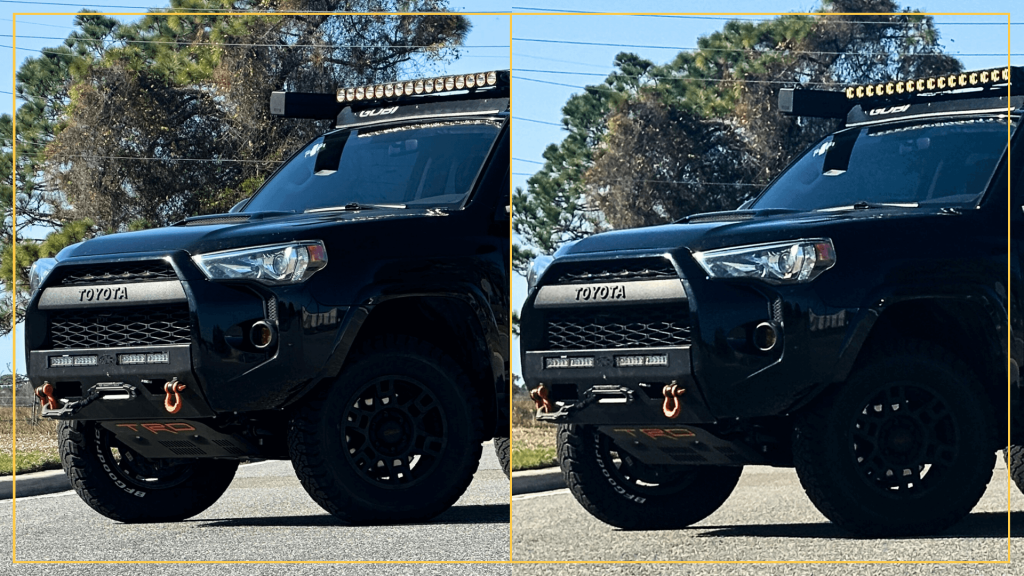
Despite having sound deadening everywhere except the roof and engine bay, the FLEX ERA proved to be surprisingly quiet. Mounted properly to the Gobi Stealth rack, wind noise is minimal to the point of being almost nonexistent: no whistling, no vibration-induced hum, and no fatigue from constant background noise because it’s simply not there.
PRO TIP: Roof-mounted lighting lives or dies by how it interfaces with airflow. Solid mounting and thoughtful placement matter just as much as the light itself. It should be noted that my installation left little to no headlight leveling capability after it was finally bolted down.
A powerful light bar that ruins the cabin experience quickly becomes something you regret installing IF you want something you can pick your in-laws up in. In hindsight, perhaps that’s a bonus.
Installation Overview: Where Things Got Interesting
If you followed KC’s instructions step by step and mounted this to a compatible surface, the install would land somewhere between easy and moderate, especially with a second set of hands for positioning and tightening.
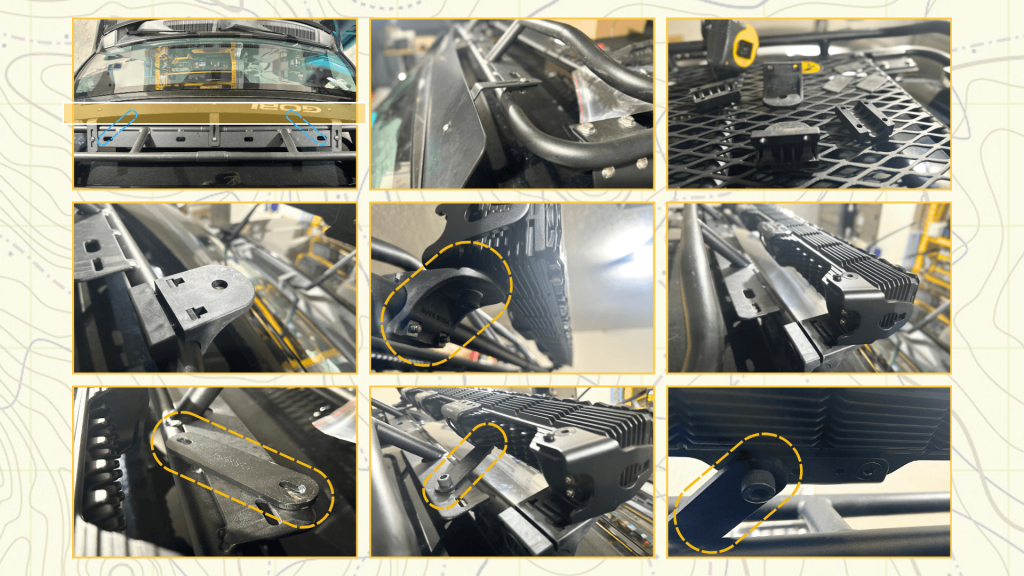
Because this was a custom installation on a Gobi Stealth rack, the tool list leans slightly more “garage fabrication” than plug-and-play. It’s important to clarify that KC’s supplied mounting hardware works very well for traditional applications. If you’re mounting this bar to a more conventional surface, your list may be shorter. THAT SAID, I did start with a fantastic base from KC: Universal Tube Clamp Light Mount Bracket Set (SKU: tubeclamp-bracket-pair), and if you’re trying this on a GOBI rack, these brackets match the 1″ tubing like … well, like something that matches the other thing perfectly.
For this install, I used the following:
- KC FLEX ERA® 40” Light Bar (Master Kit – SKU 0294)
- KC supplied the wiring harness, relay, and fuse
- Auxbeam 8-gang switch panel
- Drill and assorted drill bits
- KC Universal Tube Clamp Light Mount Bracket Set (highly recommended)
- Custom mounting plates (and by custom, I mean stuff I had on hand)
- Stainless bolts, washers, and Nylock nuts
- Socket and wrench set
- Torque wrench
- Heat shrink, wire loom, and zip ties
- KC Universal Wire Hider (highly recommended)
- Rust inhibitor or paint for drilled metal surfaces
- Soundproof rage room to scream or cry in (highly recommended)
But, naturally, I chose to mount it to a Gobi Stealth rack, which erased any semblance of “easy” from the process. My overlanding buds all joke that every install is “so easy even a child could do it.” If your child had endless time, a grasp of profanity, and a frag grenade, that could be true in this case.
Because the GOBI rack isn’t designed for my configuration of a 40” modular bar (that’s not to say Gobi doesn’t have brackets for other applications), custom mounting tabs were fabricated, hole locations were carefully measured and drilled, and all exposed metal was treated to prevent corrosion. That’s a fair amount of fancy talk for me, finding two chunks of rounded extension plates, from another project, and performing some fab techniques that would have made an OSHA rep call the cops. Aligning a straight bar across a curved rack hoop requires patience, minor adjustments, and the occasional pause to reconsider your life choices, and I came to grips with my father’s rage at me holding the flashlight incorrectly.
PRO TIP: Measure everything twice, then walk away for ten minutes before drilling. Future-you will thank present-you.
This wasn’t difficult because of KC. It wasn’t easy because I chose a non-standard mounting solution, and that distinction matters. I also decided to (this is the part that KC probably shudders to read), I bought extended bolts and ran through the supports directly into the light assembly, while the other end was bolted to the GOBI rack. It’s a thing of beauty, people.
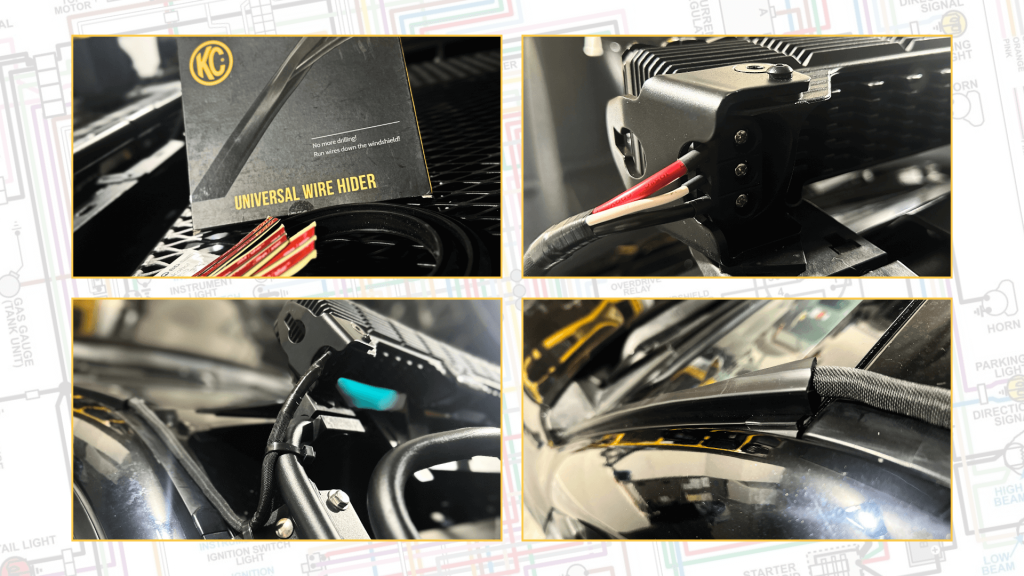
Wiring followed the rack, down the A-pillar with (and I cannot stress this enough, you must buy) the KC’s new wider hider V2 (when I bought mine they only had the original), through the firewall, and into the Auxbeam system. Everything was loomed, protected, and routed cleanly. Once mounted, clearance checks with the sunroof and Gobi wind fairing confirmed everything played nicely together, and I could get it in and out of the garage!
Documentation & Support: One Small Miss
If there’s one area KC could improve, it’s the bridge between physical instructions and digital support. While the printed, box-integrated template is excellent, the QR code experience felt a bit disjointed and didn’t lead me to the exact product install. Expanding KC’s YouTube content with more close-up install variations, especially for custom mounts, would go a long way toward supporting installers who don’t have common sense – yeah, like me.
This isn’t a knock on the product. It’s simply an opportunity to strengthen an already well-thought-out system.
Final Thoughts
Pros
- Outstanding build quality with real weight and structural confidence
- The lightbar can be mounted straight or in semi-curved configurations
- Modular design allows beam pattern customization with the provided lens, and you can purchase amber lenses too if that’s your jam
- Excellent long-range visibility without uncontrolled glare
- Colored Bezel Kits for 10″ Segments
- Surprisingly quiet when mounted properly on a roof rack
- Fantastic packaging and one-to-one printed assembly instructions
- KC’s long-standing brand reputation and support
Cons
- Premium price point compared to mid-tier light bars
- Not plug-and-play for the quasi Gobi Stealth rack applications, some custom work
- QR code documentation could be clearer for specific product installs
- Final adjustability may be limited depending on the custom mounting method
- If you look directly into the lightbar while it’s on full blast, it will create a portal to the center of the sun (so, safety first)
Let’s be upfront: the KC FLEX ERA 40” is not an inexpensive lighting solution.
It lives squarely in the same premium space as offerings from Baja Designs, Rigid, and others. All of those brands make excellent products, and I won’t pretend otherwise. Where KC differentiates itself is not by chasing maximum output numbers alone, but by combining modularity, build quality, and long-term durability into one system.
Once you unbox the FLEX ERA, handle the individual modules, and feel the hardware, the pricing stops feeling abstract. There’s a very real, tactile sense that you’re paying for materials, engineering, and longevity, not just branding or inflated specs.