
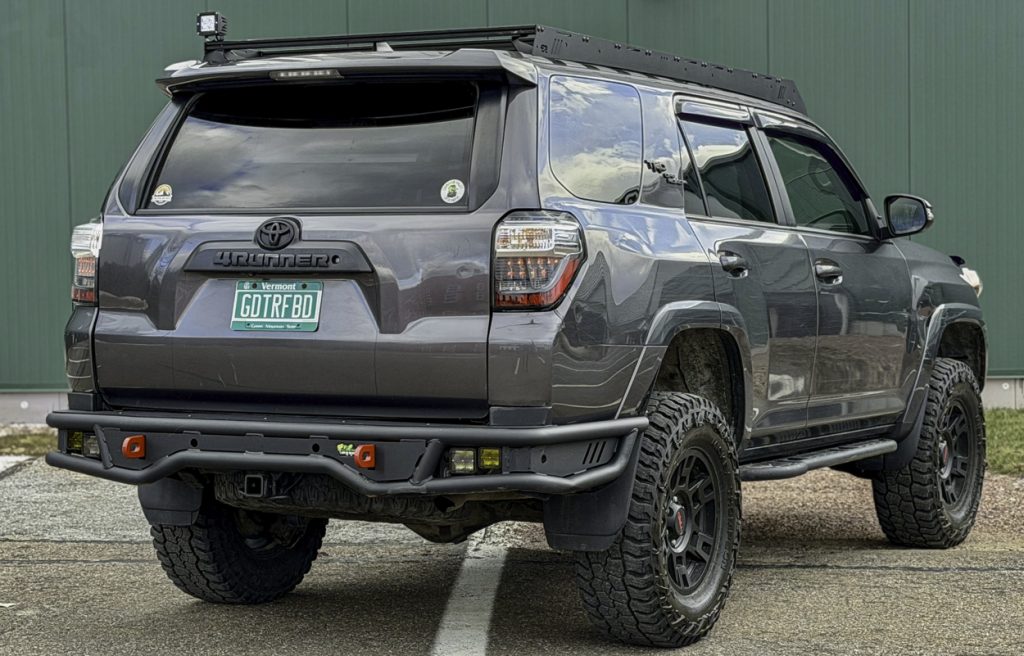
When prioritizing mods, installing a rear bumper is easy to put off… that is, until you come off a ledge a little harder than planned and hear the factory plastics remind you they were never meant to be armor.
To get ahead of things, I installed the Ironman 4×4 Raid Rear Bumper on my 2019 Toyota 4Runner last year, with a simple goal. Add meaningful rear protection for off-road use without compromising what makes the 4Runner such an easy daily driver.
I’m a dad of two, and my rig doubles as a daily driver. So when looking at bumpers, I wasn’t just thinking about trail strength, I was thinking about safety and what happens in the real world, on real roads, with real passengers. The Raid Rear Bumper is the world’s first fully crash-tested and SRS airbag-compatible tubular-style bumper, so, from a safety perspective, it’s second to none.
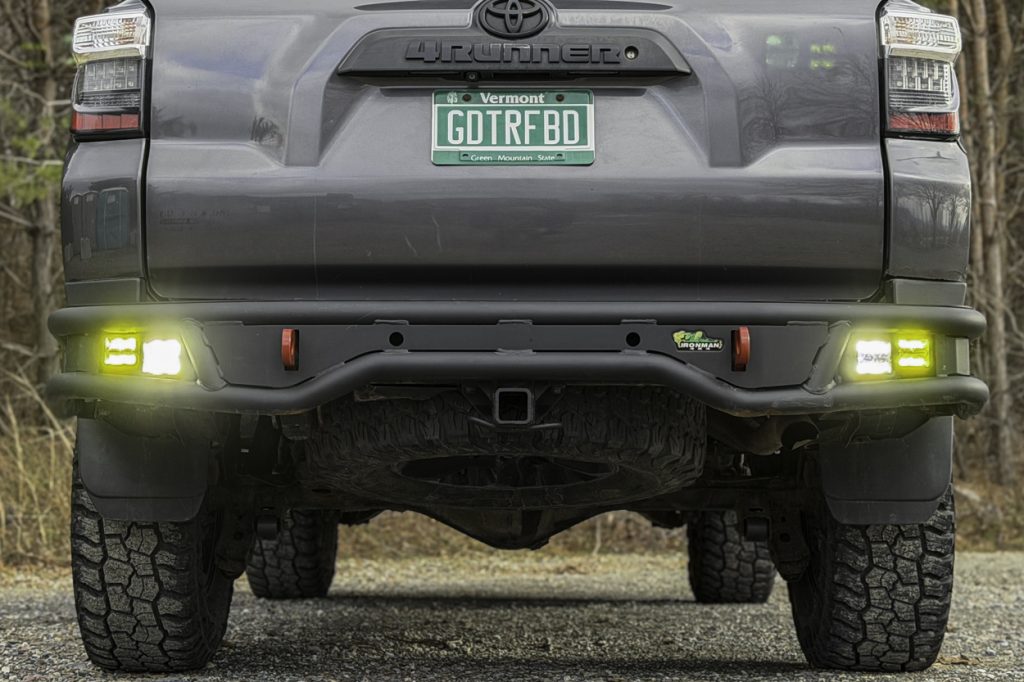
Since the install, I’ve put roughly 8,000 miles on the bumper, including several longer trips and 20+ days off-road. It’s been driven all over New England, Vermont, and Maine in particular. It’s also been out on longer overland trips, including Quebec’s Swisha Loop and a long-haul up to James Bay. Most of my trail time is spent overlanding: gravel roads, forest routes, moderate-rated trails, but I don’t shy away from more technical sections. This review reflects that mix.
Table Of Contents
Build Quality & Key Features
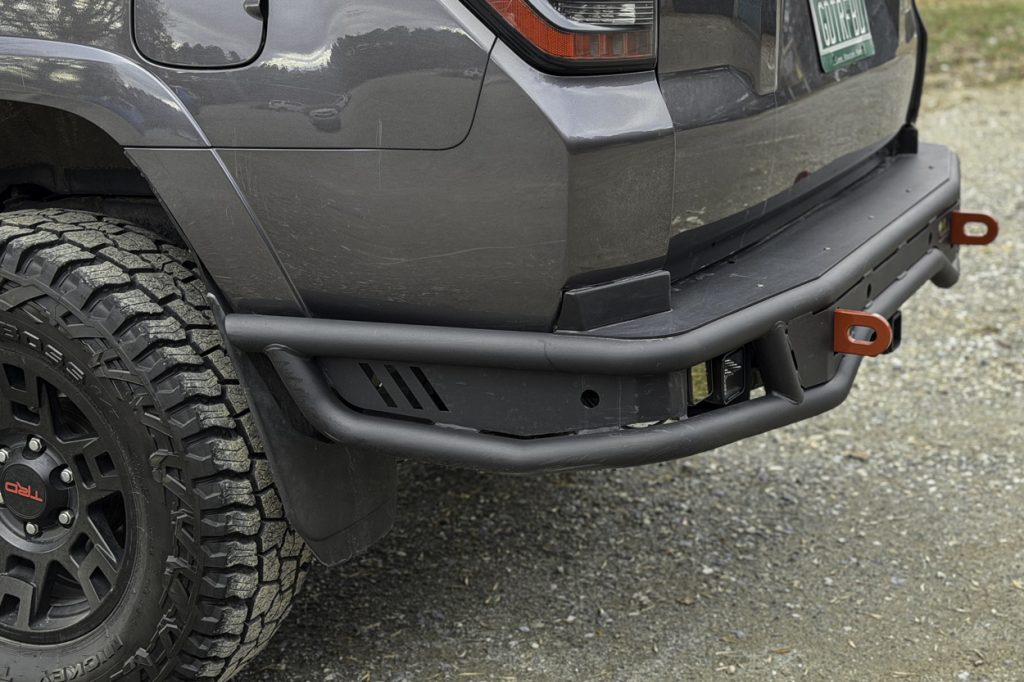
Overall, the construction feels solid and thoughtfully engineered. The main bumper structure has held up well, and the recovery points inspire confidence when in use.
Overview
- tube style steel rear bumper
- fully crash safety tested and airbag compatible
- works with 2010-2024 4Runner
- improved ground clearance
- frame-mounted recovery points (included)
- factory hitch compatible
- integrated mounts for up to four cube lights (optional)
- bolt-on design (requires bumper cover trimming)
- weighs 119 lbs.
- does not support rear parking sensors or blind-spot monitoring
- Beatty BSM Relocation may work for applicable models, although some note they didn’t have issues
- durable powder coat standard
- 3-year warranty
Installation Overview
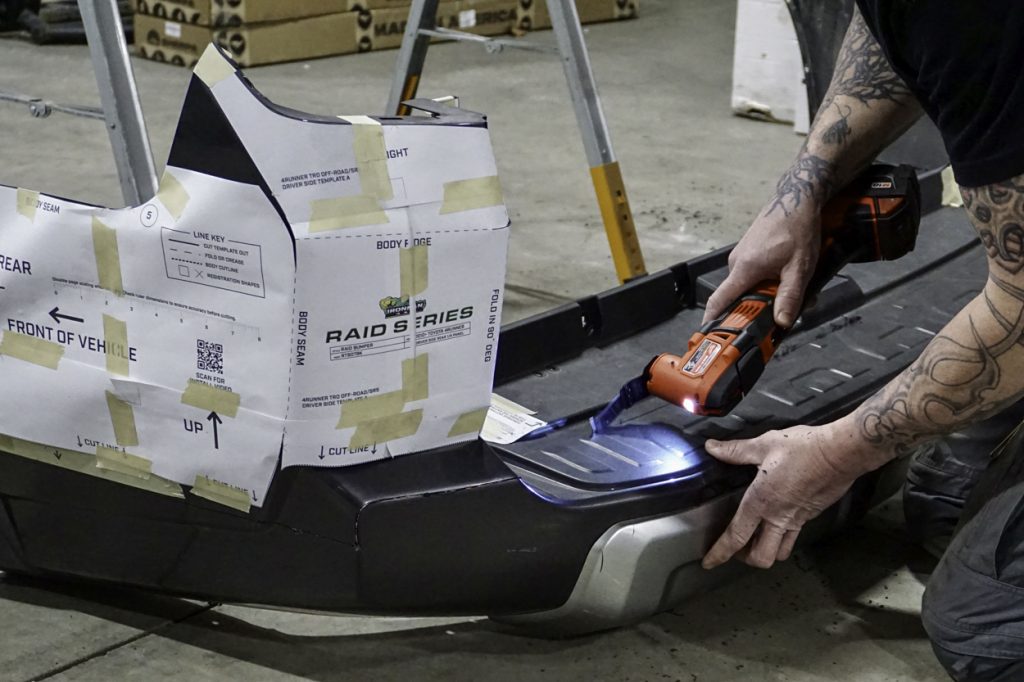
I’m not going to lie. This isn’t a quick “bolt-on and call it done” install. It’s absolutely doable, but it’s the kind of job where patience matters more than brute force. While nothing about the install is conceptually complicated, the execution demands time and precision, mainly because so much of the final result depends on how cleanly you trim the factory rear bumper cover.
In my case, the install took 2+ days because the process is naturally iterative: mark, cut, test-fit, adjust, repeat. The template provided by Ironman helps a lot, but you still want to sneak up on the final cut instead of trying to nail it in one pass. The bumper itself fits well once you’re there; getting your plastics to match it cleanly is the real work.
Ironman has a detailed video guide that supports the whole process, and the customer service team is helpful as well.
Why the RAID Rear Bumper Stands Out
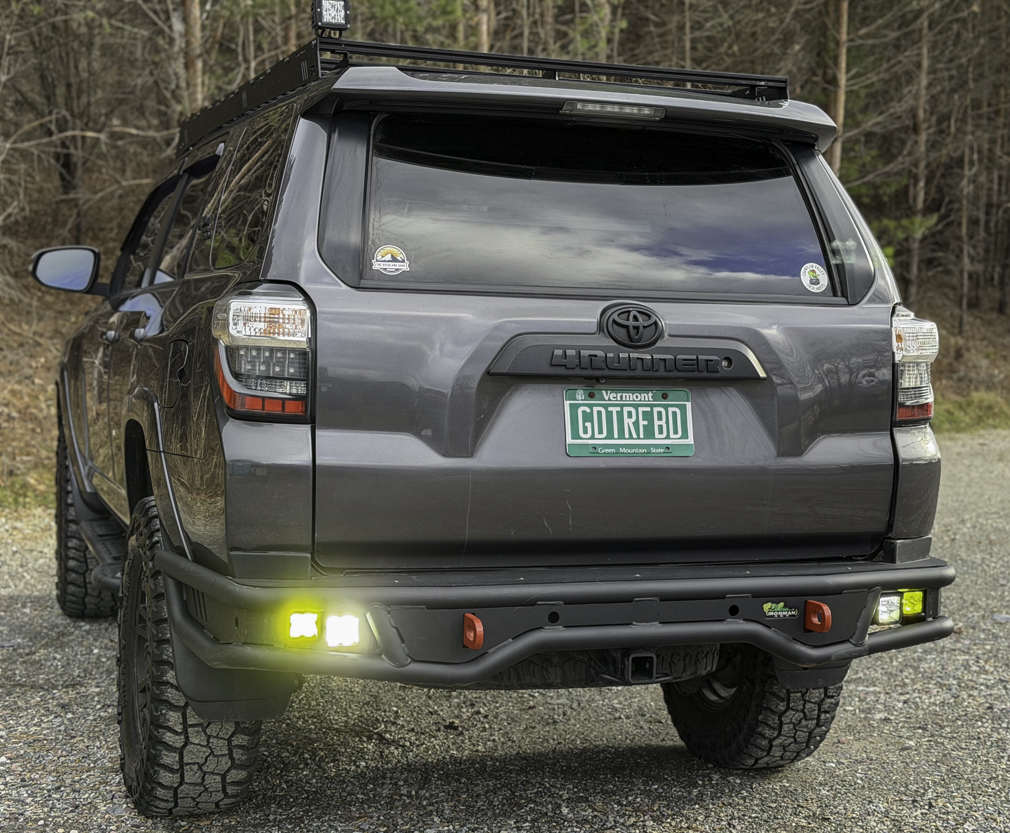
What initially set the RAID bumper apart was Ironman’s emphasis on crash safety testing and airbag compatibility. In the aftermarket bumper world, that’s not always front-and-center. For me, it mattered because my 4Runner isn’t just a trail rig. It’s a daily driver that spends most of its life on highways and back roads, often with kids in the back seat.
The design was the other big factor. The rolled steel looks sleek without being bulky, and the way the bumper sits at the tailgate creates a small platform that is used constantly. Sitting down to pull boots on, stepping up to reach the roof, staging gear at camp, it’s one of those features that sounds minor until you’ve lived with it.
And let’s not forget value. Starting around $900, the RAID rear bumper is significantly less expensive than competitors in the same class. For that money, the RAID bumper overdelivers on quality and functionality. If you’re shopping for maximum departure angle and maximum rock resistance, there are heavier-duty options out there, but they come with higher cost, more weight, and fewer concessions to daily-driver practicality.
Trail Performance & Real-World Use
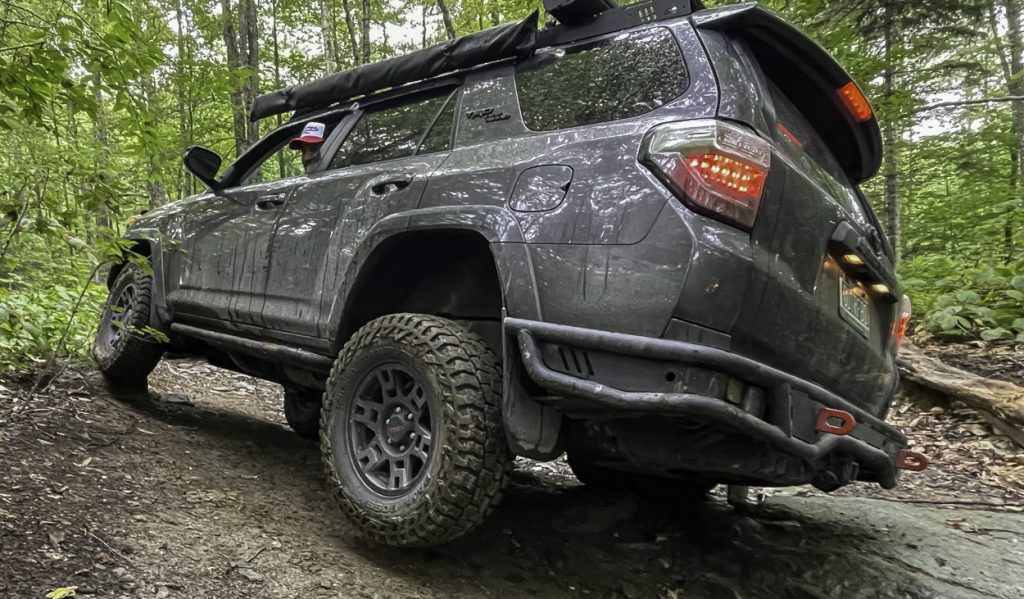
Over the past six months, this bumper has taken some real hits. The type of impact that would vaporize a stock bumper. Despite the abuse, the main structure is holding up well, but the tubular bar is where I’ve seen some wear. Hard impacts leave dents, and after bigger hits, the bar tends to shift slightly. The upside is that it’s easy to realign, loosen, adjust, tighten, but it’s worth keeping this in mind if your trails involve frequent rear contact. But overall, this is what the bumper is meant for, and if you go wheeling don’t expect perfect paint and no damage when you get back.
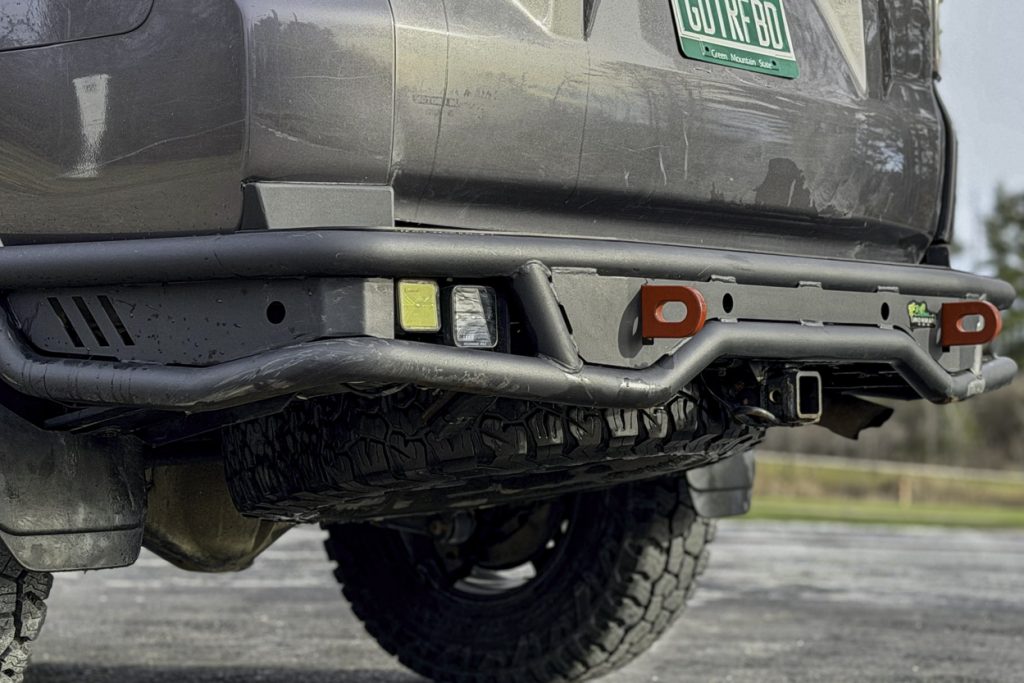
I’ve used the recovery points twice during tows, and both times they worked exactly as intended. No movement, no drama.
Clearance, Weight & Daily Driving
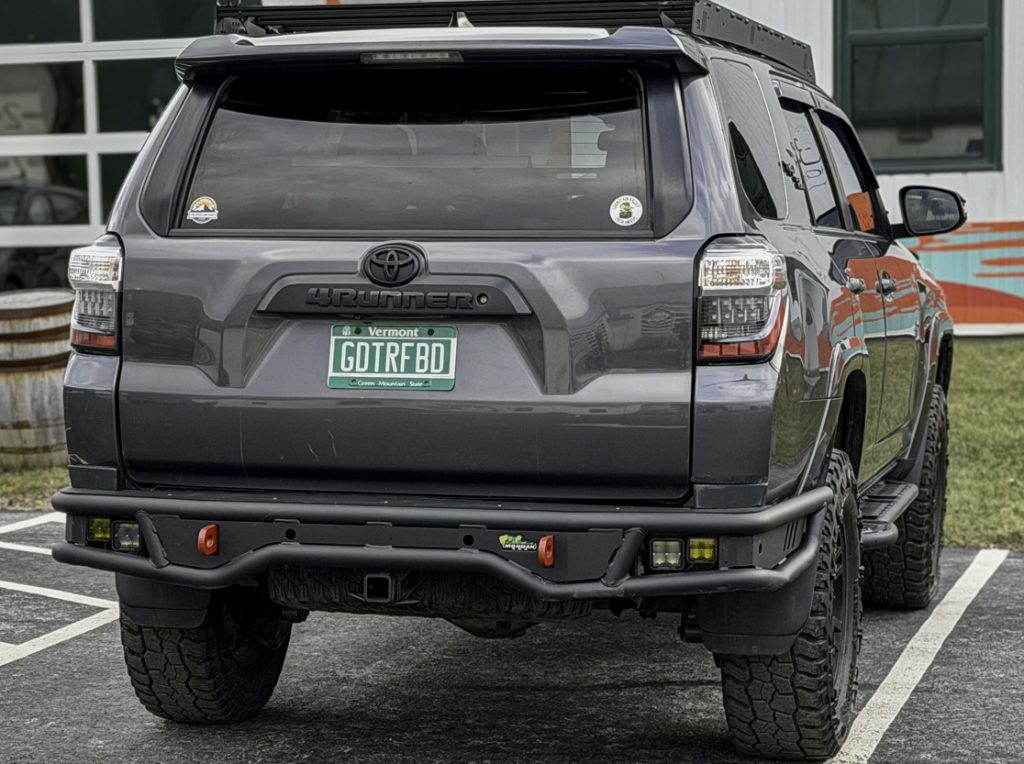
In practice, this bumper does provide some additional clearance, but it is not technically a “high-clearance” rear bumper. You are mainly limited here by the hitch/crossmember, which the bumper hugs/follows pretty tightly. The bumper does extend the overall length of the truck ever so slightly, which can matter depending on line choice.
On-road behavior has required no adjustment. Nothing that changed how the truck feels day to day.
Around camp is where this bumper really earns its keep. The tailgate platform gets used constantly, for sitting, stepping up to the roof, or just having a convenient place to lean while organizing gear.
Who’s Buying This Bumper
If your 4Runner is a daily driver that also sees regular time off pavement, especially overlanding-style travel, this bumper should be on your short list. It adds protection, improves how you use the rear of the truck, and doesn’t turn it into something you have to work around. If you’re regularly wheeling super technical trails and dropping hard onto rocks or want an install you can knock out in an afternoon, this probably isn’t the right fit.
Final Thoughts
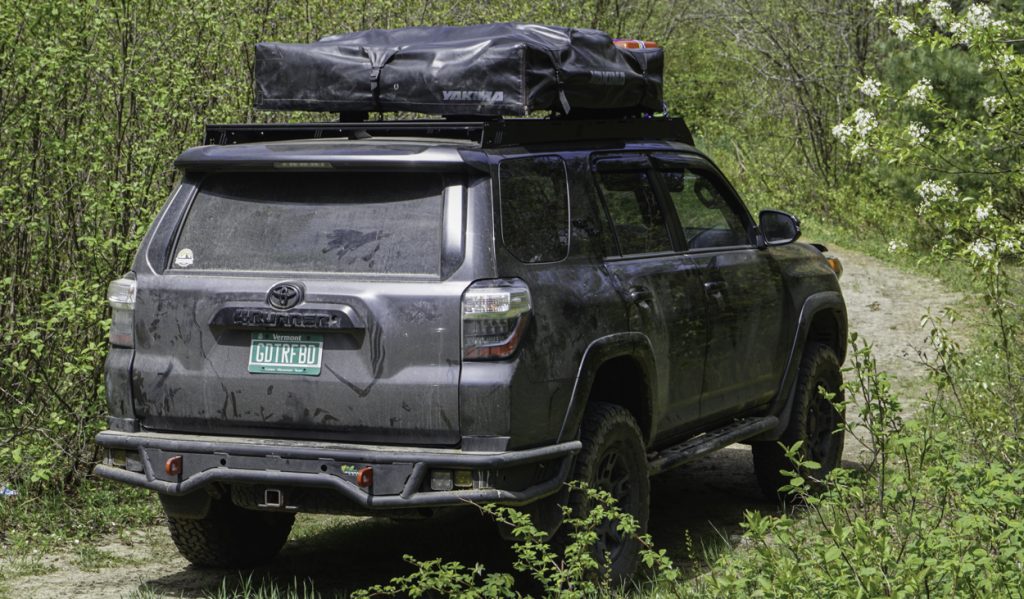
After a full season with the RAID bumper, I’d say it’s a great fit for how I actually use my truck. It’s been easy to live with on pavement, useful every day at camp, and solid where it counts when overlanding and off-roading.
But the biggest advantage in my eyes comes back to the family angle. When you’re driving long distances with kids in the back seat, you think a little differently about modifications. I needed added protection off-road, sure, but I also wanted a bumper that forced me to trade everyday safety to get it.
Overall, Ironman’s RAID Rear Bumper is a clean-looking, highly functional piece of protection that’s a great match for overlanding-style travel. If you want protection you can enjoy every day, and safety is a primary consideration, this bumper checks all the boxes.

Has it started to get rust spots yet ?
I like the overall design. But it doesn’t appear that they designed it for any type of swing out though, which is something fairly important to most.
Swing outs in my opinion are one of the worst mods. It’s a pain to get into back. Adds weight in the worst place for off roading, they vibrate. The C4 is like 350 pounds once you have stuff on it in the worst place possible. Tho I hear ironman has mixed reviews, it’s one of the only bumpers with proper frame mounted recovery points which is a big plus, and it’s not too heavy. ATM would probably be my pick as well just cos of the proper recovery points m that not one us made bumper offers. All recovery points should be frame mounted not bumper mounted. Slee and dissent are the only us companies I have found offering this, but they are premium prices.